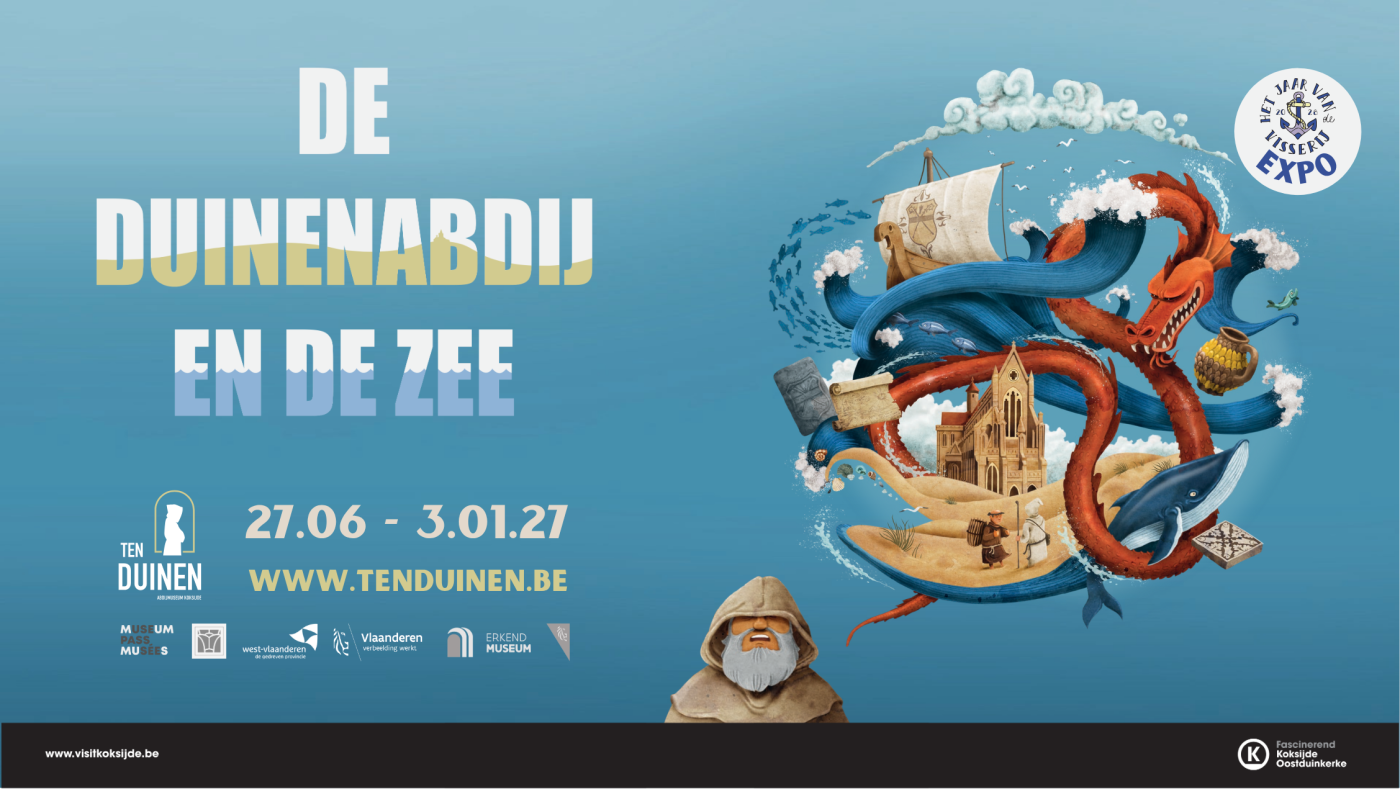
Exhibition: ‘The Abbey of the Dunes and the Sea’
How did people in the Middle Ages build a huge abbey in the middle of a rugged dune landscape, right by the sea? You’ll find out in our new exhibition, ‘The Dune Abbey and the Sea’.
What traces of the sea from the medieval period of Duinen Abbey can we still find today? Fish, oysters and cockles, for example, were on the menu at the men’s monastery, but we also see references to the sea on various items in the collection.
Thanks to a careful selection of items from the Abbey Museum’s collections and on loan from private lenders, this salty exhibition creates an atmospheric, multi-layered whole that piques your curiosity. It features fantastic drawings by illustrator Arnold Hovart and creations made from LEGO® bricks by Little Brickroom. Keep an eye on the museum’s website and social media for the supporting programme.
- Location: Abdijmuseum Ten Duinen, A. Verbouwelaan 15 Koksijde.
- Tickets: included in the price of your museum visit.. Book your tickets here
- Period: from 27 June 2026 to 3 January 2027 inclusive.
Year of Fisheries
The exhibition forms part of Koksijde’s ‘Fisheries’ theme year and tells the surprising story of the centuries-long connection between the abbey and the sea. What seems self-evident today was exceptional back then. Yet the abbey went on to become one of the most important Cistercian abbeys in Flanders.
A story of man and the sea
The exhibition takes visitors back to the 12th century. In the dunes between Veurne and the sea, the hermit Ligerius chose a simple life close to nature. His example inspired others and grew into a thriving monastic community that helped shape the region for over 700 years.
Life on the coast was not easy. Storms, sand and salt water made life difficult. But the monks learnt to cope with the forces of nature and made the sea their ally.
The sea provided food, such as fish, shellfish and crustaceans. It also forged links with other coastal areas and created opportunities for trade, cooperation and exchange. The abbey even had its own fleet. Through contacts with, amongst others, the English Cinque Ports, trade relations developed which brought the abbey wealth and influence.
Traces of the sea in the abbey
The influence of the sea is still visible today in numerous objects and building materials from the abbey. In the exhibition, visitors will discover, amongst other things, tiles featuring fish motifs, shells incorporated into bricks, and decorative objects with maritime references. Even the abbey’s emblem features a dolphin.
The sea left its mark not only on the monks’ daily lives, but also on the architecture, art and identity of the abbey.
The exhibition ‘The Abbey of the Dunes and the Sea’ tells a remarkable medieval story of survival, cooperation and living with the forces of nature. A surprising journey of discovery for young and old alike.
Discover our leisure activities
Would you like to book a guided tour of our new exhibition? Find out here what there is to see and do as part of our new exhibition ‘De Abbey of the Dunes and the Sea’.